
“Distribution” is widely used to mean an agreement between an owner of anything and a third party who buys to re-sell it. That is a very wide range. If you are uncertain as to which of these agreements might suit you, look also at merchandising agreements and agency agreements. These agreements cover simple deals set up in Canada by either a seller or the distributor, through to very comprehensive deal with a foreign buyer who holds consignment stock.
Distribution agreement: short version
A practical distribution agreement whereby a merchant or manufacturer appoints a distributor who buys the goods and re-sells on his own account at home or abroad. Short version covering all basic matters but stripped of complicated options. Includes extensive drafting notes. Favours merchant but can be edited easily to favour distributor.
Distribution agreement: high brand value product
A distribution agreement, home or export, set up by a manufacturer of a product with high brand and IP value; examples: FMCG, branded consumer durable, or patent protected industrial product. Many options provide great flexibility for you to craft exactly the deal you want.
Distribution agreement: sale of goods, full version, merchant side
A practical distribution agreement whereby a merchant or manufacturer appoints a distributor who buys the goods and re-sells on his own account at home or abroad. Very full agreement with many options to suit your exact need and equally extensive drafting notes. Favours merchant but can be edited easily to favour distributor.
Consignment and distribution agreement: distributor version
A distribution agreement set up by a substantial distributor who operates a turnkey marketing business, importing goods from many manufacturers on a consignment basis. Distributor sets the rules.
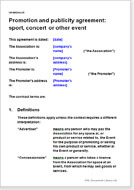
Promotion and publicity agreement: sport, concert or other event
You "own" an event. This is the agreement you make with a promoter or publicist. These are your terms, not his. It covers many practical options and protects your intellectual property.

If the document isn’t right for your circumstances for any reason, just tell us and we’ll refund you in full immediately.

We avoid legal terminology unless necessary. Plain English makes our documents easy to understand, easy to edit and more likely to be accepted.

You don’t need legal knowledge to use our documents. We explain what to edit and how in the guidance notes included at the end of the document.

Email us with questions about editing your document. Use our Lawyer Assist service if you’d like our legal team to check your document will do as you intend.

Our documents comply with the latest relevant law. Our lawyers regularly review how new law affects each document in our library.
Distribution Agreements
The primary goal of this document is to define the business relationships and protect the legal rights of both parties. It ensures such products are sold under agreed-upon pricing and provisions, while maintaining compliance with applicable laws and the Competition Act.
This information is intended for manufacturers, suppliers, and distributors looking to establish a secure, long-term partnership. It also serves as a guide for legal teams and employees who must determine how to distribute products while protecting confidential information and know-how.
Startups and SMEs often rely on these frameworks to manage their duties across different jurisdictions, such as Canada, where specific regulations may apply. Understanding these rules helps one party ensure the other party remains responsible for its duties.
What Is a Distribution Agreement?
A distributor agreement is a legally binding contract where a supplier or manufacturer authorizes a distributor to market and sell their products. In this "purchase and resale" model, the distributor buys goods on their own account, taking legal ownership and assuming the financial risk of the sale.
Distribution Agreement Templates
Distribution Agreement Templates serve as the essential blueprint for a commercial relationship where a supplier sells goods to an independent distributor for resale. While a distributor agreement template is a valuable starting point for defining business relationships. Legal experts warn against freely available templates on the internet or creating one using AI because every system has unique "material facts" that a generic document might miss.
Essential Components of a Template
A well-structured template must clearly define the territory and the products involved to prevent future disputes. It should explicitly state whether the rights are exclusive, non-exclusive, or sole, and include provisions for how to handle new products brought online during the contract term. To protect the manufacturer, templates often include minimum purchase or sales targets; if the distributor fails to meet these, the company may have the right to revoke exclusivity or terminate the agreement.
Safeguarding Intellectual Property
Your template should include robust trademark licensing clauses that require the distributor to display marks prominently and maintain records that prove the brand's presence in the market. In Canada, this is vital because trademarks can be expunged for non-use if they are not associated with the goods at the time of transfer.
Navigating Legal Risks in Canada
When using Distribution Agreements Templates, businesses must be wary of the "accidental franchise" trap. If a template exerts too much operational control or includes certain fees, it may be legally classified as a franchise under acts like Ontario’s Arthur Wishart Act, triggering heavy disclosure obligations. Furthermore, all templates used in Canada must comply with the Competition Act, ensuring that market restrictions do not "substantially lessen competition".
What is the Purpose of a Distributor Agreement?
The primary purpose of this document is to define the business relationships between parties. It allows a company to expand its market reach and increase volume without the heavy costs of local management structures. It also sets clear rules for pricing, shipment, and territory.
Types of Distribution Agreements
Choosing the right model is essential for your strategy:
- Exclusive distribution: The distributor is the only one expressly authorized to distribute products in a specific region, often to the exclusion of even the supplier.
- Non-exclusive distribution: The manufacturer can deal with multiple distributors, often creating healthy competition within the same market.
- Sole distribution: The supplier appoints one distributor but may reserve the right to sell directly within that same area.
- Selective distribution: Access is limited to specific distributors that meet certain criteria, such as technical information expertise.
What is the Difference Between Agency and Distribution Agreements?
While they seem similar, the legal provisions differ greatly. In an agency agreement, an agent acts on behalf of a principal and earns a commission without ever owning the materials.
Conversely, a distributor buys the such products outright and earns profit through a markup. Under Canada's law, liability generally falls on the distributor as an independent business, whereas a principal is often liable for an agent's actions.
Core Definitions Section
“Products”
In any distributor agreement, the definition of products must be precise to avoid future disputes regarding what the distributor is authorized to sell. This section typically lists specific goods, models, or materials, and should clarify if the rights extend to new versions developed after the date of the contract.
“Territory”
The territory defines the geographic limitation where the distribution rights apply. This can be as broad as all of Canada or limited to specific cities or market segments, such as customers in the healthcare or education sectors.
“Exclusive Distributor”
An exclusive distribution agreement means the appointed distributor is the only party authorized to sell such products in the defined territory. This often means the company agrees not to appoint other distributors or even sell directly to customers in that region.
Appointment of Sub‑Distributors
Distributors often wish to expand their reach by appointing sub-distributors. However, most distribution agreements state that this requires the prior written consent of the company to ensure compliance with brand standards and the protection of trademarks.
Independent Contractor Status
It is critical to clarify that the distributor operates as an independent business and not as an agent or employee. This provision ensures that liability for day-to-day operations remains with the distributor, protecting the manufacturer from legal claims arising from the distributor's actions.
Obligations & Performance Requirements
Minimum Purchase or Sales Targets
To ensure an exclusive distribution agreement is mutually beneficial, suppliers often include minimum purchase or sales targets. These quotas protect the company from lost revenue in a specific territory. If a distributor fails to meet these volumes, it may trigger a provision allowing the supplier to terminate the agreement or revoke exclusivity.
Marketing & Promotion Obligations
In most distribution agreements, the distributor agrees to use their "best efforts" to promote and maximize the sale of products. While the distributor typically bears the costs of local advertising, the parties may negotiate shared support or co-op marketing arrangements.
Periodic Sales Reporting
Transparency is key to a healthy business relationship. Many contracts require the distributor to provide a written report often monthly detailing sales figures and market activities. This document helps the manufacturer track performance and adjust pricing or supply as needed.
Intellectual Property & Confidentiality
Trademark and Brand Licensing
Proper trademark and brand licensing is critical in Canada, where the law follows a "use it or lose it" principle. The distributor is granted a limited right to use the supplier's trademarks, but they must ensure the brand is associated with the goods at the time of delivery to maintain legal protection.
Confidentiality Obligations
Throughout the distribution term, parties will have access to sensitive technical information and trade secrets. A robust confidentiality provision prevents the other party from disclosing this data to competitors, ensuring that proprietary know-how remains free from unauthorized use.
Return of Materials Upon Termination
Once the date of termination passes, the distributor must immediately cease using all trademarks and brand materials. The agreement usually requires the return of all confidential information, catalogues, and remaining inventory to the manufacturer to prevent brand dilution.
Warranties, Liability & Indemnities
Product Warranties
Under provincial regulations like the Sale of Goods Act, there is an implied law that products must be of merchantable quality and fit for their intended purpose. In Quebec, professional sellers are even subject to a presumption of knowledge regarding latent defects, making them responsible for any failure in product quality.
Liability Limitations (Monetary Caps)
To manage risk, parties agree to include liability limitations or monetary caps in their distribution agreements. These provisions are generally enforceable under governing law as long as they are clearly drafted and do not attempt to exclude liability for gross negligence or intentional harm.
Indemnification for Third‑Party Claims
Indemnification clauses protect one party from losses caused by the other party’s actions, such as a demand resulting from IP infringement or a defective shipment. If a third party sues, the responsible party must cover the legal costs and damages, provided written notice is given within a set number of business days.
Duration, Renewal & Termination
Initial Term
Every successful partnership needs a clear starting point. The initial term of distribution agreements defines the first phase of your relationship, often acting as a "probationary period". This timeframe frequently 6 to 12 months allows both the company and the distributor to evaluate their compatibility before committing to a long-term deal.
Renewal Mechanisms
To avoid a sudden lapse in services, your document should include clear provisions for renewal. Parties agree on whether the agreement extends automatically or requires written notice by a specific date. This ensures continuity in your market presence and keeps the distribution flow steady.
Termination Events & Notice Requirements
Sometimes, partnerships must come to an end. In Canada, if a contract lacks an express termination clause, "reasonable notice" is typically required by law. Common termination triggers include a material breach, insolvency, or a failure to meet minimum purchase targets. Clear notice requirements help both parties transition without unnecessary legal friction.
Competition Law Considerations
Competition Law Risk Assessment
In Canada, all distribution agreements must navigate the federal Competition Act. A risk assessment ensures that an exclusive distribution agreement does not inadvertently "substantially lessen competition" in the market. The Competition Tribunal can intervene if a major supplier imposes terms that block new players from competing effectively.
Prohibition of Market Allocation
The act specifically monitors "market restriction," which involves penalizing a distributor for selling outside a defined area. While you can define a territory, forcing a customer to deal only in specific markets can be viewed as an anti-competitive practice if it harms the broader economy.
Assignment, Changes & Force Majeure
Assignment Restrictions
You chose your business partner for a reason. Assignment restrictions prevent one party from transferring their duties to a third party without prior written consent. This ensures you maintain control over who represents your trademarks and handles your such products in the market.
Definition of Force Majeure & Relief
Life is unpredictable. A Force Majeure clause provides relief when an "unforeseeable and irresistible" event prevents delivery or payment. Because this concept is not automatically implied in common law, it must be explicitly defined in your entire agreement to protect you from liability during a crisis.
Dispute Resolution & Governing Law
Governing Law Selection
In any distributor agreement, the governing law clause determines which set of legal rules will interpret the contract. Businesses operating in Canada must ensure their selection respects provincial regulations, as a court may override a choice of law if it denies a party their statutory rights under competition law or franchise acts.
Dispute Resolution Mechanism
To resolve a deal that has soured, parties agree on a formal mechanism such as mediation or binding arbitration.
Schedules & Annexes
Product List Schedule
The product list schedule is a vital part of the entire agreement, as it explicitly defines which such products the distributor is expressly authorized to sell. Including this list prevents future confusion regarding whether the distributor has rights to new models or accessories developed after the contract's effective date.
Pricing & Volume Schedules
These schedules detail the financial core of distribution agreements, including pricing structures and minimum purchase targets. Clear provisions on payment terms and delivery lead times ensure both parties remain responsible for their duties hereunder while protecting the company from a failure to meet market demand.
All rights reserved


