
Business lease agreements

Our business lease agreements integrate the draftsman's 20-years of experience of leasing commercial property with a comprehensive legal framework that provides excellent protection for the landlord and a wide range of options to suit almost all requirements. All our business lease agreements include the provisions you would expect as standard, such as one for a guarantor. Full guidance notes with each document explain your options.

Templates

Business lease: suite of offices

3 Reviews

This lease is for letting part of a multi-tenanted building for offices or business purposes. The premises could be a suite or floor of a modern office block or three office rooms above retail space. Comprehensive professionally drawn lease with all the provisions you would expect or want -- drawn in plain English for easy edit.
Self contained office lease agreement

5 Reviews

This is an easy to use lease for letting the whole of an office building to a single tenant for business purposes. Features: guarantor provision; break provision; rent review options; draft agreement for a security deposit; options for assignment; no sub-letting; no management or service charge.
Business lease: offices above shop

This is a comprehensive but uncomplicated business premises lease for letting self contained office or storage space above a shop or other workspace. There is no provision for shared services or service charge recovery. Features: guarantor provision; break provision; rent review options; options for assignment; no sub-letting; no management or service charge.
Business lease: shop in parade

1 Review

This lease is for letting a single shop or retail unit in a multi-tenant parade owned by the same landlord. The shop could be used for any purpose; for example: sale of goods, restaurant, cafe or sale of services (e.g. estate agency or PC repair). Any upper parts of the building are let separately. Features: service charge provision; guarantor; break provision; rent review options; option for assignment; sub-letting not allowed; draft agreement for security deposit.
Lease of shop in parade with flat over

2 Reviews

This is a comprehensive lease for letting a shop or other retail unit with a flat or maisonette above for the tenant to live. The shop could be used for any purpose for example: sale of goods, restaurant, cafe or sale of services (e.g. estate agency or PC repair). Features: service charge provision; guarantor; break provision; rent review options; option for assignment; sub-letting not allowed; draft agreement for security deposit.
Lock up shop lease agreement

20 Reviews

This is a lease for a self contained lock-up shop. It could be in a parade or detached. It does not require provision for service charge recovery. It may be pure retail or it may have offices or other business space attached. Features: guarantor; break provision; rent review options; option for assignment; sub-letting not allowed; draft agreement for security deposit.
Workshop, factory, barn lease

10 Reviews

This is a comprehensive and easy to use lease for letting a workshop, barn or other self contained building of any size, for industrial, storage or mixed use. Features: guarantor provision; break provision; rent review options; options for assignment; no sub-letting; no management or service charge.
Business lease: land, vacant or with plant or buildings

8 Reviews

A lease of land for any business use, for example, plant or equipment storage or a scrap yard. The lease provides for use of any buildings and/or items of plant on the property. Features: guarantor; break provision; rent review options; options for assignment and sub-letting; draft agreement for security deposit.
Business lease: unit on industrial estate

7 Reviews

A comprehensive, professionally drawn business lease for a unit on an industrial estate or a business park. The use could be for any purpose, such as a workshop, factory, depot or warehouse. The unit could be one of a block under one roof or a stand-alone building. The lease includes the use of shared services on the park or estate, such as security, access roads, signs and parking and many other practical points. All the features you would expect and many practical options.
Car park lease agreement

3 Reviews

This professionally drawn lease is specifically for a car or lorry park. It provides for practical matters relating to the parking infrastructure on the land and how the park will be operated. Features: guarantor; break provision; rent review options; options for assignment and sub-letting; draft agreement for security deposit.
Restaurant lease agreement

4 Reviews

This letting agreement is for any property with a commercial kitchen. That is, a restaurant, café, delicatessen or fast food outlet. The lease allows for the property to have space used for other business purposes too, such as offices above. Features: guarantor; break provision; rent review options; option for assignment; sub-letting not allowed; draft agreement for security deposit; schedule covering kitchen and cooking equipment; draft agreement for security deposit; schedule covering kitchen and cooking equipment.
Lease agreement: pub or restaurant with flat over

2 Reviews

This is a comprehensive lease for letting a pub or licensed restaurant with a flat or maisonette above for the tenant to live. The premises may be detached or connected. Features are: service charge provision; guarantor; break provision; rent review options; option for assignment; sub-letting not allowed; draft agreement for security deposit.
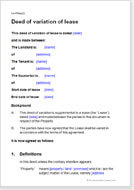
Deed of variation of lease

5 Reviews

A simple deed of agreement between a landlord and a business tenant to change the terms of any lease. Change as much or as little as you wish. It provides the structure in simple terms for you to insert the actual changes you want to make. Includes text for some of the commonest reasons to need this document. Use for any commercial lease.
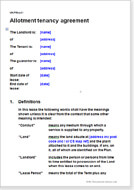
Allotment tenancy agreement

A simple but comprehensive lease / tenancy agreement of land for an allotment. Tenant occupies for personal, not business use, so the lease is straight forward. Nonetheless, it assumes that the landlord wants full protection. Features: guarantor option; break provision; fixed rent increases.
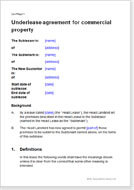
Underlease agreement for commercial property

9 Reviews

This under lease (also called a sublease) is suitable for subletting any commercial property as a whole, or for subletting part of the property to one or more subtenants. It can be used to sublet any kind of business premises including offices, shops, industrial units such as factories, warehouses and workshops, and land. Features: new guarantor; break provision; rent review options; drawn for property owner or experienced property professional.
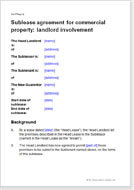
Sublease agreement for commercial property: landlord involvement

3 Reviews

This sublease includes optional provisions that give the head landlord additional rights when dealing with the subtenant. It can be used to sublet part of or the whole of any commercial property, including offices, shops, industrial units such as factories, warehouses and workshops, and land. Features: new guarantor; release of old guarantor; break provision; rent review options; drawn for the property owner or experienced property professionals.

Free Business lease agreements

At Net Lawman, we believe cost should never be a barrier to accessing quality legal documents. If you're facing financial hardship, or a registered charity, or a new startup or community group with very limited funds, you may qualify for our free document offer. We're committed to making legal help more accessible.

It’s simple:

  • Tell us a little about your situation and the document you’re looking for.
  • Our friendly support team will review your request quickly.
  • If you qualify, we’ll send your document straight to your inbox; free, with our best wishes.

We reserve the right to request reasonable evidence to support your eligibility.

watertight guarantee
Backed by our watertight guarantee

If the document isn’t right for your circumstances for any reason, just tell us and we’ll refund you in full immediately.

writing in plain english
Written in plain English

We avoid legal terminology unless necessary. Plain English makes our documents easy to understand, easy to edit and more likely to be accepted.

Notes
Guidance notes included

You don’t need legal knowledge to use our documents. We explain what to edit and how in the guidance notes included at the end of the document.

email
Support from our legal team

Email us with questions about editing your document. Use our Lawyer Assist service if you’d like our legal team to check your document will do as you intend.

Update
Up to date with the latest law

Our documents comply with the latest relevant law. Our lawyers regularly review how new law affects each document in our library.

What is a Business Property Lease?

A business property lease is a legally binding contract between a landlord and a tenant that outlines the terms of a commercial tenancy. It is synonymous with terms such as a commercial lease, commercial lease agreement, commercial rental agreement, or lease agreement on commercial property.

Unlike residential agreements, this contract is specifically designed for a tenant to rent commercial property to operate a business, such as an office, retail store, or industrial warehouse.

Who should use the Business Property Lease templates?

Finding the perfect commercial space for your business is a huge milestone, but the paperwork that follows is just as important. Whether you are moving into an industrial facility or a vibrant retail space, a commercial lease agreement serves as the vital written agreement between the landlord and tenant.

Unlike renting a residential property, a commercial lease is heavily driven by the specific terms you negotiate, making a solid foundation essential.

Utilizing professional Business Property Lease templates is highly recommended because they provide a standardized framework for outlining critical terms and conditions. These standard commercial lease documents act as a roadmap, ensuring both parties understand their business needs and obligations before the initial term even begins.

Reliable Templates Ensure Essential Elements are Not Overlooked

When you use a standardized framework, you ensure that critical components like the lease term, monthly rent, and renewal options are clearly defined. A professional lease agreement helps you avoid missing small but vital details, such as the security deposit amount, the due date for rent payment, and the exact leased premises being occupied.

These templates also help clarify complex financial structures, such as a triple net lease or double net lease, where the tenant pays for property taxes, insurance, and maintenance on a monthly basis. Having these details in a written agreement protects everyone if issues like unpaid rent or such default arise later on.

Compliance with Provincial Regulations Across Canada

Navigating local laws can be tricky, but high-quality Business Property Lease templates are designed to ensure your lease complies with applicable laws across various provinces. In Ontario, for instance, the Commercial Tenancies Act provides the governing law, but the lease itself often takes precedence.

Using a template that adheres to these provincial regulations ensures that clauses regarding written notice, quiet enjoyment, and reasonable wear are legally sound. This legal alignment provides peace of mind for both landlord and tenant, knowing their contract stands up to the requirements of their specific jurisdiction.

A Customizable and Legally Binding Starting Point

One of the best features of professional Business Property Lease templates is that they serve as a legally binding starting point that remains flexible. Because every commercial property is different, these editable formats allow you to tailor the document to your specific business needs.

You can easily adjust the lease duration or add specific terms for leasehold improvements, percentage rent based on gross sales, or responsibilities of each party. Whether you are setting up a fixed term lease or a month to month arrangement, these templates give you the professional structure. Our templates come with complete guidance notes, notes on each paragraph in the contract, so a user can easily edit and use it on DIY basis.

Reducing Disputes Through Accountability

Confusion often leads to conflict, but a detailed agreement minimizes these risks by assigning specific responsibilities. The document clarifies if the landlord pays for certain utilities or if the tenant must reimburse the landlord for shared operating costs. It defines who is responsible for such repairs, from structural fixes to interior maintenance.

Safety is also a priority, and the agreement ensures there is an insurance policy in place. The contract specifies the insurance covering the premises and requires such party to provide landlord with a valid insurance policy certificate. This protect's the tenant's property and the landlord's asset from unforeseen damages.

Customization for Every Property Type

Every commercial property is unique, and a standardized residential form simply won't cut it. A tailored agreement allows you to customize the permitted use of the square foot area to ensure it fits your specific professional services or retail needs. You can also negotiate renewal options and determine how much notice is required if you need to lease early or extend your stay.

Furthermore, customization allows for rules regarding other tenants and signage, ensuring your business environment remains professional. Whether your property type is an industrial bay or a downtown office, these tailored clauses provide the flexibility your business requires to grow.

Ensuring Legal Enforceability and Protection

In the commercial world, a written agreement often takes precedence over default provincial laws. It provides a legally binding framework for the security deposit, last month's rent, and the month's rent paid in advance. If any disagreements arise, the terms attached hereto serve as the final authority for the parties hereto.

Common Types of Lease Structures

How costs are allocated depends on the lease type selected:

Gross Rent Lease

In a gross rent lease, the tenant pays one set rent amount to the landlord that covers the base rent and all incidental expenses. This "all-in" approach is popular because it makes budgeting simple; you won't have to worry about fluctuating utility bills or property tax hikes.

In this scenario, the landlord decides to take on the responsibility for property taxes, insurance, and maintenance. While the base rent might look higher on paper, the predictability it offers many commercial tenants is often worth the premium.

Net Lease

A net lease shifts some of the building's financial responsibilities onto the occupant. In a standard net lease, the tenant agrees to pay a lower base rent but must also cover at least one major incidental expense, such as property taxes, directly.

This structure requires the landlord and tenant to clearly define which costs are shared. For example, in a "single net" setup, you might pay the taxes while the landlord agrees to keep paying for insurance and maintenance. It offers a lower starting price per square foot but requires more careful financial planning for those extra bills.

Triple-Net (NNN) Lease

The triple-net (NNN) lease is the most hands-on option for a tenant. You pay base rent plus nearly all operating costs, including property taxes, building insurance, and common area maintenance. This is highly common for larger industrial spaces or standalone buildings.

While the landlord agrees to handle major structural repairs (like the roof or foundation), almost everything else is your responsibility. Because the financial risk to the owner is low, they may require a smaller security deposit, though this is always negotiable.

Percentage Rent Lease

Common in malls and retail centers, a percentage rent lease ties your costs to your success. You pay a base rent amount plus a percentage of your gross sales once you cross a specific revenue threshold.

This structure means the landlord and tenant share the ups and downs of the market. It’s important to ensure that the definition of "sales" is clear and that certain items, like the tenant's property or returned goods, are not unfairly included in the total.

Essential Components of the Lease Agreement

Every lease agreement should include these core sections:

Parties and Premises

The commercial lease agreement must clearly identify the legal names of the landlord and tenant. Beyond the names, it provides a detailed description of the commercial property, including the physical address and the specific square foot area being occupied. Accuracy here ensures both parties know exactly what space is being paid for and where the boundaries of the tenant’s property begin, as defined in the lease. The lease should specify what is considered the tenant's property within the leased premises, such as fixtures, equipment, and personal belongings brought in by the tenant.

Permitted Use

This clause defines the specific business activities allowed on the property. The tenant agrees to these terms to ensure the business remains compliant with local zoning bylaws and the landlord's mix of other occupants. It is a critical safeguard to prevent future disputes over how the space is utilized.

Rent and Additional Rent

The rent amount is typically divided into base rent and "additional rent". While base rent covers the space itself, additional rent—often called TMI—is used to reimburse landlord costs for Property Taxes, Maintenance, and Insurance. Understanding this breakdown helps commercial tenants budget for the total cost of their commercial property.

Maintenance and Repairs

A well-drafted lease clearly allocates responsibility for building upkeep. Generally, the landlord agrees to maintain the structural integrity, such as the roof and foundation, while the tenant is responsible for the interior space, including HVAC and plumbing. Negotiating these duties upfront prevents unexpected expenses for either party.

Insurance and Indemnity

Landlords typically require the tenant to maintain a such policy that includes property and general liability insurance. This protects against damage to the tenant's property and provides indemnity for injuries occurring on-site. For added security, the landlord may also request a security deposit, which is often negotiable and held throughout the lease term.

Business Needs and Property

Every business has unique requirements when it comes to leasing commercial property, and understanding these needs is essential for long-term success. The type of commercial property you choose, whether it’s a retail space, office, or industrial facility, should align with your operational demands, customer base, and growth plans. Factors such as location, accessibility, parking, and proximity to suppliers or clients can all influence your decision and should be reflected in the lease agreement.

A comprehensive commercial lease will address not only the base rent but also additional expenses like property taxes, insurance, snow removal, and property management fees. Commercial tenants should pay close attention to how these costs are allocated, as well as to provisions for rent increases, renewal options, and termination clauses. For instance, a retail business might negotiate a percentage rent clause based on gross sales, while an industrial facility may require specific terms for handling hazardous materials or waste disposal.

Working with a professional to review and negotiate your lease agreement can help ensure that your interests are protected and that the lease supports your business needs. By customizing the lease to address your specific requirements, you can create a stable foundation for your business to thrive, manage costs effectively, and avoid unexpected challenges down the road.

Navigating Provincial Legal Frameworks

The law governing your lease depends on the property's location:

Ontario: Governed by the Commercial Tenancies Act (CTA). It allows for significant flexibility, meaning the written lease often overrides the default provisions of the Act.

Quebec: Governed by the Civil Code of Québec (CCQ). A lease here is considered a personal contractual right. Some provisions are of "public order," meaning they cannot be waived, such as the rule that a landlord cannot refuse a sublease without a "serious reason".

Alberta: Governed by common law and the Commercial Tenancies Act (Alberta), which primarily addresses landlord remedies for unpaid rent and evictions.

Ending or Breaking the Lease

Expiration:

Most leases conclude naturally at the end of the agreed lease term, with no further action needed unless both parties decide to renew or extend the agreement.

Early Termination:

Ending a lease early is usually only possible if there’s a specific terminationclause or “break option” included in the contract, allowing either party to exit under agreed conditions.

Notice Requirements:

For month-to-month leases, tenants typically must give at least one month’s written notice before moving out, ensuring the landlord has enough time to find a new tenant.

Default and Eviction:

A commercial lease can also set out its own rules about ending a tenancy, which must be followed even if they differ from the Commercial Tenancies Act. Landlords often require business owners to personally guarantee the lease, which means personal assets may be at risk if the business fails.

If rent is unpaid, landlords may hire a bailiff to assist with the distress process, which can involve seizing and selling the tenant's property to recover unpaid rent; however, certain types of property cannot be seized. Additionally, if the lease requires the landlord's consent for ending or transferring the lease, that consent cannot be unreasonably withheld.

© 1999 - 2026 Net Lawman Limited.
All rights reserved